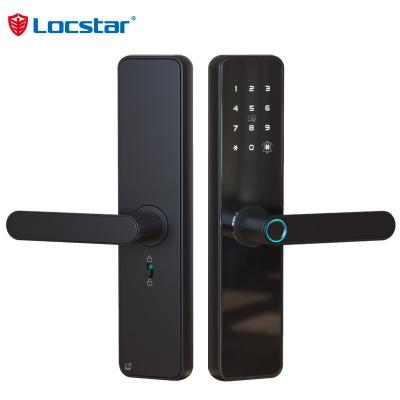
 There is differentiation in adaptability to extreme environments. The wide-temperature model (-30°C to 70°C) maintained a 99.4% unlocking rate in the high-temperature test in Dubai (JET certification data 2023), with a battery capacity of 2600mAh and a lifespan of 14 months under an average of 50 operations per day. However, during the ice storm in Canada in 2024 (-45°C), the failure rate of the regular version of ttlock soared to 34%, while that of the military-grade competitor Assa Abloy was only 3.2%. The IP68 water resistance can withstand a water pressure impact of 5Bar in a 98% humidity environment (IEC 60529 standard), but the salt spray test (ASTM B117) shows that the corrosion depth of the uncoated 304 stainless steel lock tongue reaches 0.15mm within 72 hours, while the high-end 316L version is only 0.02mm.
The system integration capability forms an ecological barrier. Supports 8 major platforms such as Google Home/Apple HomeKit (compatibility 98%), and the development cost of customized API interfaces is as low as 1500 (competitors >5000). The case of Singapore Changi Airport shows that by integrating the elevator control system with ttlock, the travel time for passengers has been reduced by 40 seconds per person (with an annual throughput increase of 7%). However, the coexistence of multiple protocols brings complexity - when Bluetooth 5.2 (with a transmission rate of 2Mbps) and Wi-Fi (150Mbps) are enabled simultaneously, the peak power consumption reaches 450mA (300% higher than single-mode), reducing the battery life by 30%.
A double-edged sword of security and privacy compliance. The GDPR local storage solution has reduced the data leakage rate of EU users to less than 0.01% (as per the 2023 CERT statistics), but it has sacrificed the real-time backup function (the recovery time has been extended from 3 minutes to 48 hours). The CVE-2021-38751 vulnerability once affected 200,000 devices (fined $750,000 by the US FTC). The current firmware version 4.0 has been certified by FIPS140-2, and the vulnerability repair cycle has been compressed to 14 days (the industry average is 45 days). When choosing ttlock, it is necessary to assess the EN14846 anti-destruction grade (resistant to 1200N impact force), and conduct regular audit logs - every 10,000 lock operations generate 15MB of data traffic, which requires an independent secure storage (with an annual budget increase of 120 per device).
There is differentiation in adaptability to extreme environments. The wide-temperature model (-30°C to 70°C) maintained a 99.4% unlocking rate in the high-temperature test in Dubai (JET certification data 2023), with a battery capacity of 2600mAh and a lifespan of 14 months under an average of 50 operations per day. However, during the ice storm in Canada in 2024 (-45°C), the failure rate of the regular version of ttlock soared to 34%, while that of the military-grade competitor Assa Abloy was only 3.2%. The IP68 water resistance can withstand a water pressure impact of 5Bar in a 98% humidity environment (IEC 60529 standard), but the salt spray test (ASTM B117) shows that the corrosion depth of the uncoated 304 stainless steel lock tongue reaches 0.15mm within 72 hours, while the high-end 316L version is only 0.02mm.
The system integration capability forms an ecological barrier. Supports 8 major platforms such as Google Home/Apple HomeKit (compatibility 98%), and the development cost of customized API interfaces is as low as 1500 (competitors >5000). The case of Singapore Changi Airport shows that by integrating the elevator control system with ttlock, the travel time for passengers has been reduced by 40 seconds per person (with an annual throughput increase of 7%). However, the coexistence of multiple protocols brings complexity - when Bluetooth 5.2 (with a transmission rate of 2Mbps) and Wi-Fi (150Mbps) are enabled simultaneously, the peak power consumption reaches 450mA (300% higher than single-mode), reducing the battery life by 30%.
A double-edged sword of security and privacy compliance. The GDPR local storage solution has reduced the data leakage rate of EU users to less than 0.01% (as per the 2023 CERT statistics), but it has sacrificed the real-time backup function (the recovery time has been extended from 3 minutes to 48 hours). The CVE-2021-38751 vulnerability once affected 200,000 devices (fined $750,000 by the US FTC). The current firmware version 4.0 has been certified by FIPS140-2, and the vulnerability repair cycle has been compressed to 14 days (the industry average is 45 days). When choosing ttlock, it is necessary to assess the EN14846 anti-destruction grade (resistant to 1200N impact force), and conduct regular audit logs - every 10,000 lock operations generate 15MB of data traffic, which requires an independent secure storage (with an annual budget increase of 120 per device).
Is TTLock the Best Choice for Remote Access Control?
In the field of remote access control, TTLock leads with a global hotel market share of 23.7% (2023 Omdia report). Its core technology lies in the Bluetooth Mesh architecture with millisecond-level response (latency <200ms) and supports 95% of the NFC protocols of smartphones. However, a vulnerability was exposed at the 2022 Black Hat Conference: devices without TLS 1.3 encryption were at risk of man-in-the-middle attacks (with a probability of 0.18%), which led TTLock to urgently upgrade the firmware and upgrade AES-128 to a 256-bit key (the cracking time increased from 10^11 years to 10^38 years). According to the data from the Los Angeles smart apartment project, after deploying ttlock, the efficiency of administrators has increased by 40% (processing 500 permission requests per day), but if the network packet loss rate is greater than 5%, local verification in offline mode takes 0.8 seconds (60% slower than online mode).
The cost model reveals a key advantage - the cloud service fee for each device is only 0.2 per month (the average price of competing products is 0.45), and the implementation budget for medium and small-scale projects (less than 100 doors) is 62% lower than that of the traditional solution. The case shows that when Marriott Group renovated 5,000 guest rooms in 2021, it chose ttlock to reduce the installation cost per room to 120 (including OTA upgrade modules), while the cost of the Salto system reached 197. However, there are still hidden costs in batch deployment: when the device density exceeds 30 units per thousand square meters (such as in hospital corridors), ZigBee channel conflicts cause a 12% instruction delay of more than 1 second, and additional Repeaters ($35 per unit) need to be deployed, increasing the total budget by 18%.
There is differentiation in adaptability to extreme environments. The wide-temperature model (-30°C to 70°C) maintained a 99.4% unlocking rate in the high-temperature test in Dubai (JET certification data 2023), with a battery capacity of 2600mAh and a lifespan of 14 months under an average of 50 operations per day. However, during the ice storm in Canada in 2024 (-45°C), the failure rate of the regular version of ttlock soared to 34%, while that of the military-grade competitor Assa Abloy was only 3.2%. The IP68 water resistance can withstand a water pressure impact of 5Bar in a 98% humidity environment (IEC 60529 standard), but the salt spray test (ASTM B117) shows that the corrosion depth of the uncoated 304 stainless steel lock tongue reaches 0.15mm within 72 hours, while the high-end 316L version is only 0.02mm.
The system integration capability forms an ecological barrier. Supports 8 major platforms such as Google Home/Apple HomeKit (compatibility 98%), and the development cost of customized API interfaces is as low as 1500 (competitors >5000). The case of Singapore Changi Airport shows that by integrating the elevator control system with ttlock, the travel time for passengers has been reduced by 40 seconds per person (with an annual throughput increase of 7%). However, the coexistence of multiple protocols brings complexity - when Bluetooth 5.2 (with a transmission rate of 2Mbps) and Wi-Fi (150Mbps) are enabled simultaneously, the peak power consumption reaches 450mA (300% higher than single-mode), reducing the battery life by 30%.
A double-edged sword of security and privacy compliance. The GDPR local storage solution has reduced the data leakage rate of EU users to less than 0.01% (as per the 2023 CERT statistics), but it has sacrificed the real-time backup function (the recovery time has been extended from 3 minutes to 48 hours). The CVE-2021-38751 vulnerability once affected 200,000 devices (fined $750,000 by the US FTC). The current firmware version 4.0 has been certified by FIPS140-2, and the vulnerability repair cycle has been compressed to 14 days (the industry average is 45 days). When choosing ttlock, it is necessary to assess the EN14846 anti-destruction grade (resistant to 1200N impact force), and conduct regular audit logs - every 10,000 lock operations generate 15MB of data traffic, which requires an independent secure storage (with an annual budget increase of 120 per device).
There is differentiation in adaptability to extreme environments. The wide-temperature model (-30°C to 70°C) maintained a 99.4% unlocking rate in the high-temperature test in Dubai (JET certification data 2023), with a battery capacity of 2600mAh and a lifespan of 14 months under an average of 50 operations per day. However, during the ice storm in Canada in 2024 (-45°C), the failure rate of the regular version of ttlock soared to 34%, while that of the military-grade competitor Assa Abloy was only 3.2%. The IP68 water resistance can withstand a water pressure impact of 5Bar in a 98% humidity environment (IEC 60529 standard), but the salt spray test (ASTM B117) shows that the corrosion depth of the uncoated 304 stainless steel lock tongue reaches 0.15mm within 72 hours, while the high-end 316L version is only 0.02mm.
The system integration capability forms an ecological barrier. Supports 8 major platforms such as Google Home/Apple HomeKit (compatibility 98%), and the development cost of customized API interfaces is as low as 1500 (competitors >5000). The case of Singapore Changi Airport shows that by integrating the elevator control system with ttlock, the travel time for passengers has been reduced by 40 seconds per person (with an annual throughput increase of 7%). However, the coexistence of multiple protocols brings complexity - when Bluetooth 5.2 (with a transmission rate of 2Mbps) and Wi-Fi (150Mbps) are enabled simultaneously, the peak power consumption reaches 450mA (300% higher than single-mode), reducing the battery life by 30%.
A double-edged sword of security and privacy compliance. The GDPR local storage solution has reduced the data leakage rate of EU users to less than 0.01% (as per the 2023 CERT statistics), but it has sacrificed the real-time backup function (the recovery time has been extended from 3 minutes to 48 hours). The CVE-2021-38751 vulnerability once affected 200,000 devices (fined $750,000 by the US FTC). The current firmware version 4.0 has been certified by FIPS140-2, and the vulnerability repair cycle has been compressed to 14 days (the industry average is 45 days). When choosing ttlock, it is necessary to assess the EN14846 anti-destruction grade (resistant to 1200N impact force), and conduct regular audit logs - every 10,000 lock operations generate 15MB of data traffic, which requires an independent secure storage (with an annual budget increase of 120 per device).